
Technology
King Arthur Baking Sourdough Sidekick Review: Rising to the Occasion
By Katherine Langford
Advertisement · Why this ad?
Marcus manages the day-to-day editorial workflow across all brands, coordinating coverage assignments and ensuring editorial standards are met. He previously served as city editor at the Pioneer Press and holds a degree in Political Science from Carleton College.
More from Marcus →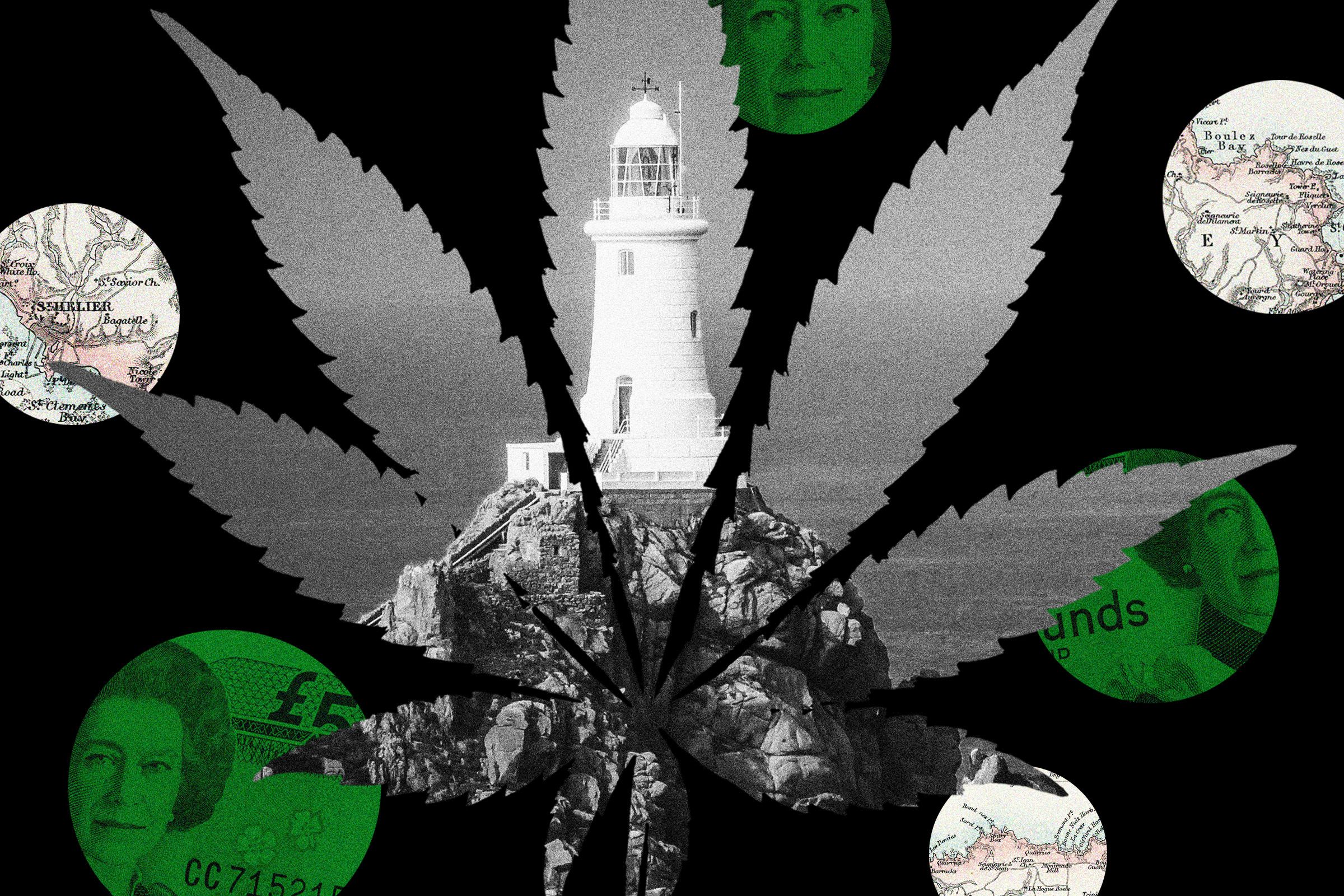
Save Story Save this story Save Story Save this story Steven Tan walks along a narrow concourse in the Northern Leaf greenhouse in St Lawrence, Jersey, reading aloud the strains of his cannabis plants: Pink Gasoline, Moon Beam Gelato, Carbon Fibre, Gorilla Kush. Rows of plants stretch off into the distance. To the untrained eye, they look largely the same, with their distinctive jagged-edged, multi-fingered leaf shape and sticky buds like tiny pinecones. But Tan, the CEO and director of medical cannabis manufacturer Northern Leaf, knows them intimately. “These plants are all different,” he says, stopping next to a mature Carbon Fibre specimen. “Just like humans.” Northern Leaf is one of the largest licensed medical marijuana producers in Europe. Its 100,000-square-foot growing facility is based in Jersey, the largest of the Channel Islands, located between England and France. Previously, this greenhouse was home to Jersey tomatoes, once a famed crop on the island that came close to extinction, thanks to growing fuel costs and cheaper competition from overseas. Now, it is fitted out with all of the technology required for cultivating cannabis that meets strict regulations for medical use, which include: automated irrigation, environmental monitoring, and air purification. Despite being just 45 square miles in size, with a population of 100,000, Jersey—which lies 14 miles off the coast of the French mainland but is a British Crown Dependency—has emerged as an unlikely player in the medical cannabis industry. Although its total exports (over 9,200 kilograms in 2025) are small compared to UK growers, this represents an enormous amount per capita, and cannabis is fast becoming one of the island’s important new industries. Jersey’s chief minister, Lyndon Farnham, has previously said that he wants Jersey to be a “centre of excellence” for medical cannabis, and for cannabis production to become a mainstay of the island’s economy. Jersey, a British Crown Dependency that sits between the UK and France, that has become an integral hub for the medical cannabis industry. Photograph: Getty Images Currently, 90 percent of Jersey’s cannabis production comes from Northern Leaf. In 2025, the company exported £8.4 million ($11.3 million) worth of medical marijuana to markets including the UK and Germany (regulations mean it is only permitted to grow for export and cannot sell to customers in Jersey). Tan has much greater ambitions. He points to another famous Jersey export, Jersey Royal potatoes. “Jersey’s potato industry did £40 million in 2025,” he said. “I am already doing a quarter of the potato industry on 5 percent of the land. On 20 percent of the land, I could create an industry worth more than the potato industry. That is where it will get interesting.” Born in Malaysia to a Chinese dad and Irish mother, Tan, 50, wanted to become a vet, but after graduating from university in 1998, ended up developing software for Citibank. He was making good money, but his heart wasn’t in finance. What really interested him was growing weed. “I loved the science of it, the genetics, the seeds, the smells,” Tan says. The early 2000s were the perfect time for an inquisitive young business grad to get into the cannabis business. Across the world, governments were legalizing medical marijuana and moving towards decriminalization over draconian sentencing. Tan began bouncing around jurisdictions that were relaxing laws on cannabis, working as a consultant in California, the Netherlands, and Canada. “I started to see these legal frameworks opening up. The minute they existed, I went there,” he says. Jersey has a somewhat unique regulatory environment. As a Crown Dependency, it has close ties to Britain, but is not a part of the UK. Crucially, it is self-governing: It can make its own laws. Jersey’s main reputation today is as a tax haven, attracting some of the world’s wealthiest individuals and companies, thanks to its lack of capital gains tax and 0 percent corporation tax for most companies. Along its coastline, next to twee beachside cafes and Nazi bunkers (the Channel Islands were the only part of the British Isles to be occupied by Hitler’s forces in World War II), you can find offices of international banks and wealth management firms catering to the super rich. Although traditionally culturally conservative, Jersey has become something of a trailblazer on cannabis. The island legalized medical cannabis in 2019. Today, five private clinics operate on the island. The latest figures suggest that 6 percent of the population is prescribed cannabis, compared to an estimated 0.4 percent in Germany and 0.1 percent in the UK. Upon legalization, the island’s chief minister, Lyndon Farnham, laid out ambitious plans for the island to become a hub of the medical cannabis trade, repurposing the horticultural facilities and know-how from its tomato-growing glory days for this new endeavor. Tan joined Northern Leaf as CEO in 2024, when the company was in dire straits after a failed IPO. That year, it was valued at just £3.7 million, despite having spent as much as £30 million on its weed-growing facility. Tan nevertheless saw a lot of potential, and over the last two years has seen capacity at the site increase from 25 percent to 75 percent. He believes the £8.4 million of product the company exported last year is just the beginning. Northern Leaf's 100,000-square-foot growing facility. “On 20 percent of the land,” says CEO Steven Tan, “I could create an industry worth more than the potato industry. That is where it will get interesting.” Courtesy of Northern Leaf Sarah Clover, a barrister at Kings Chambers who works on cannabis licensing in Jersey, told WIRED the island’s advantage is hard to replicate. Growers are inspected by the UK Medicines and Healthcare products Regulatory Agency (MHRA), which is known for enforcing rigorous standards on quality. “Anybody buying from Jersey knows that the stuff coming out of it is absolutely gold standard, because the MHRA says it is,” she says. Permits, however, are handled by a small team on the island: “You can make an application for a permit on a Monday and get it on a Tuesday.” Many within the Jersey medicinal cannabis industry now want to go beyond growing the raw ingredient and package it for export as a final product on the island. Northern Leaf already has the facilities to do so, but Jersey law dictates it can only export bulk amounts of raw cannabis for other companies to process and pack for distribution and sale. The company is waiting to see if Jersey will change its law. “At the minute we’re kind of on this seesaw—which way will the island go?” Clover says. “It could really take off here. Jersey could be a life sciences hub, not just for cannabis but for all sorts of pharmaceuticals.” But running a cannabis business on a small island poses challenges, and not everyone is enthused about the idea of expansion. Tan has faced off against residents every time that the facility has expanded production. Some locals have complained that they can smell cannabis from their balconies. Others have linked the growing industry to concerns over misuse of cannabis on the island, despite the fact that all of its product is exported. Cannabis is a “contributory factor” in 22 percent of admissions to the island’s acute mental health ward, according to Jersey’s health minister. One patient, Michael, told WIRED that he was prescribed medical cannabis for 18 months after having tried two other prescribed medications for insomnia and anxiety. “The initial assessment was simple. I had a meeting with the cannabis doctor who was pretty evangelical about its medicinal properties. They check your medical history with your GP, and within 10 days you’re good to go,” he says. Michael was prescribed 30 grams a month of “unbelievably good” cannabis and told that if he ran out he could back and ask for more. “I stopped because it
By Katherine Langford

By Katherine Langford

By Marcus Chen
By Marcus Chen