Business
Sonia Gandhi revisits Diwali memories
By Katherine Langford
Advertisement · Why this ad?
Katherine oversees editorial operations across all six brands. Before joining The Meridan Group, she spent 14 years at the Minneapolis Star Tribune, where she led the metro desk through its digital transformation. She holds a Master's in Journalism from Northwestern's Medill School.
More from Katherine →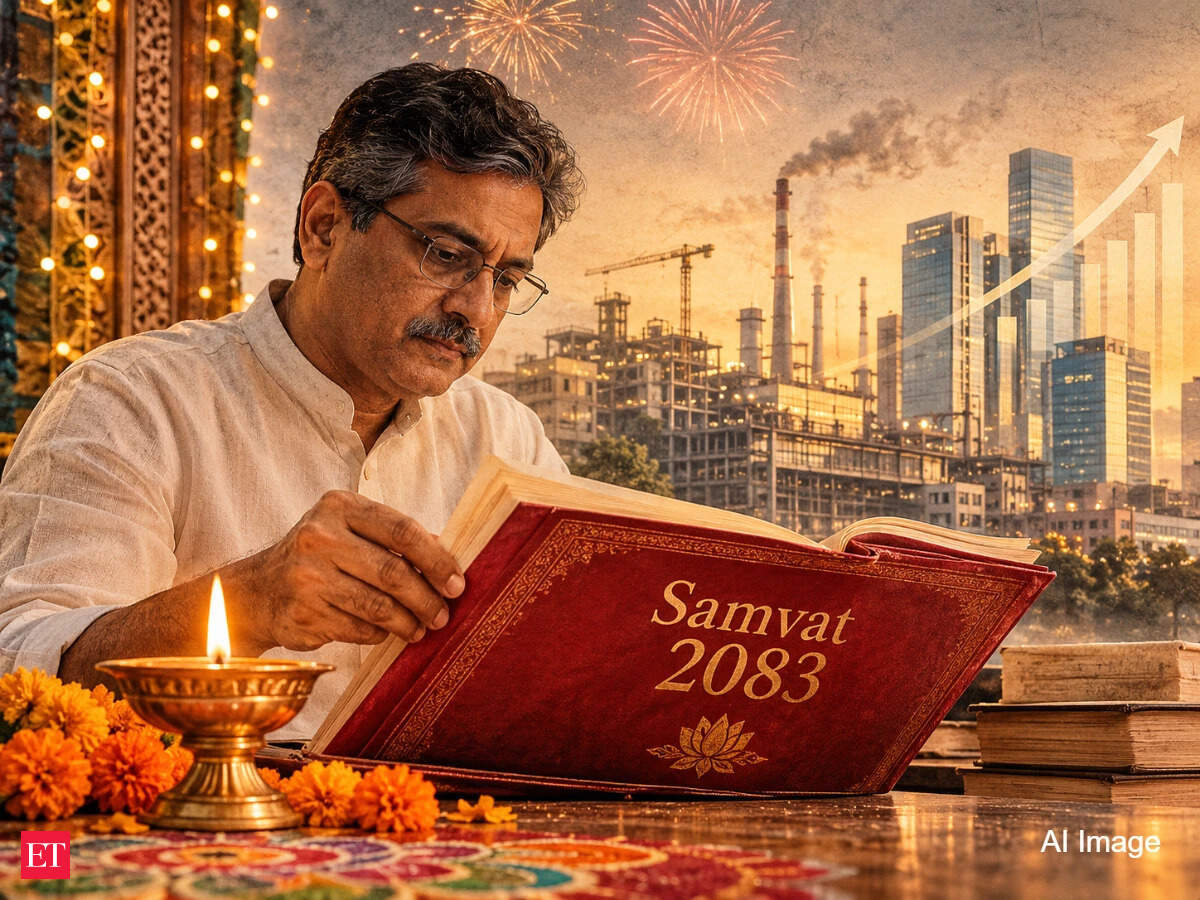
Listen to this article in summarized format Listen Loading... × × Subscribe to Unlock AI Briefing and Premium Content New Year Offer 24 Hours Left Subscribe Now Already a member? Sign In What's Included Exclusive Stories Daily ePaper Access Smart Market Tools Curated Investment Ideas Ad-lite Experience Subscription ET Online Diwali marks the beginning of Samvat 2083 , the traditional Hindu New Year that has long held special significance for India's business community. For generations, traders and merchants have treated the occasion as the start of a fresh commercial cycle, opening new account books and seeking prosperity for the year ahead. The tradition continues in modern India through Chopda Pujan (ritual worship of account books) and the stock exchanges' annual Muhurat Trading session. But the significance of a new Samvat extends well beyond Dalal Street. Since it is a new year for businesses, it also offers an occasion to assess the prospects of India's wider economy, its businesses and the forces likely to shape commercial activity in the coming year. Also Read: Nifty bulls reclaim 25,000 mark as FIIs step up India buying A resilient economy faces an uncertain global environment The Indian economy enters Samvat 2083 with reasonably strong domestic fundamentals, although the external environment remains challenging. Recent economic indicators suggest that domestic demand continues to provide an important growth cushion. India's services sector expanded at its fastest pace in four months in October, Reuters reported. Improved domestic demand supported new business, pointing to continued strength in the country's largest economic sector. However, subdued hiring and weaker international orders suggest that domestic momentum has yet to translate into equally strong external demand. Live Events You Might Also Like: ET Graphics: Inside India’s factories — Jobs, pay, margins Services have become a major driver of India's economic expansion, covering everything from financial services and technology to transport, hospitality and professional services. Sustaining growth will require businesses to convert demand into new investment and employment. Also Read: Finance ministry estimates India’s Q2 FY27 GDP growth at 7.35% Festive demand provides an early signal The festive season offers an encouraging starting point for the new Samvat. October's gross Goods and Services Tax (GST) collections rose 22.9% year-on-year to a record Rs 2.31 lakh crore. Net GST collections stood at Rs 2.03 lakh crore, up 25.6%. The increase points to substantial economic activity during the festive period, although GST receipts also reflect the timing of tax payments and business settlements. The festive season has provided an encouraging indication of consumer demand as Samvat 2083 begins. Dhanteras gold sales improved despite domestic prices remaining significantly higher than a year ago, suggesting that consumers have not abandoned traditional festive purchases even in a high-price environment. Gold sales on Dhanteras were estimated at around 52 tonnes, up 12% from 46 tonnes in the previous year, TOI reported. In value terms, sales were pegged at approximately Rs 70,000 crore. Silver sales were also expected to increase to around 300 tonnes from 250 tonnes. Jewellers saw gold sales volumes rise 8-10% while sales value increased 18-20% year-on-year, as per an ET report. Senco Gold reported a growth of more than 25% in sales value. A correction in gold prices just before Dhanteras helped revive buying interest. Wedding-related demand and advance bookings provided further support. The trend offers a useful insight into India's consumption economy. Even when prices are elevated, culturally significant occasions can sustain spending, although consumers may adjust the size and composition of their purchases. The strong response across smaller cities is particularly encouraging for organised retail. The bigger question is whether this festive momentum will extend into the post-Diwali period and translate into sustained demand for automobiles, consumer durables and other discretionary products. For retailers, automobile manufacturers, consumer goods companies and jewellery businesses, the sustainability of festive demand will be more important than the initial sales numbers. The real test is whether spending remains strong after the festival season. Manufacturing needs to regain momentum The manufacturing sector enters Samvat 2083 with a mixed set of indicators. India's HSBC Manufacturing Purchasing Managers' Index slipped to 54.7 in October from 55.1 in September. A reading above 50 indicates expansion, so factory activity remains in growth territory. However, the moderation in new orders and domestic demand suggests that the pace is losing some momentum. There is a positive signal from overseas markets. Export orders grew at their fastest pace in six months, helping manufacturers offset softer domestic demand. Input-cost inflation also fell to its lowest level since February, while selling-price increases were the weakest in nearly four years. This could offer some relief to businesses facing pressure on margins. However, factory employment growth slowed and business confidence remained below its long-term average. Manufacturers also increased inventories, partly as a precaution against possible supply disruptions. The challenge for the coming year will be to turn export demand into sustained production growth. Capacity expansion will depend on how confident businesses are about future orders rather than short-term inventory accumulation. The employment question cannot be ignored A recurring concern in the latest business surveys is the weak response of hiring to improving economic activity. Employment has remained subdued even as new business improved. The October composite PMI had similarly shown that hiring had almost stalled despite stronger private-sector activity. This raises an important question about the quality of economic growth. Businesses appear capable of handling higher workloads without proportionately increasing their workforce. That may reflect productivity improvements, cautious expansion plans or uncertainty about the durability of demand. For India's economy, however, sustained employment creation is essential to broaden consumption beyond households that already have relatively strong purchasing power. The coming Samvat will therefore need to be judged not merely by GDP growth but also by whether businesses begin translating stronger orders into more jobs. Food inflation and rural demand remain vulnerable The inflation outlook could prove particularly important for consumer-facing businesses. India runs the risk of prolonged food inflation with pressure extending across grains, chicken and milk. Food accounts for a substantial share of household expenditure, particularly in lower-income households. Persistent food inflation can squeeze disposable incomes and leave consumers with less money for discretionary purchases. It can also raise operating costs for food processors, restaurants and other businesses. The impact could be more pronounced in rural India, where household purchasing power is closely linked to agricultural income and food prices. Agricultural output and rural demand will consequently be important variables to watch. A favourable rural income environment could support sales of two-wheelers, consumer durables and fast-moving consumer goods. Conversely, higher food bills could limit the recovery in these categories. External risks India's dependence on imported energy makes crude oil prices a critical variable for Samvat 2083. The West Asia conflict has already exposed the vulnerability of global energy supply chains. Brent crude recently raced towards $120 a barrel amid concerns about disruptions to supplies through the Strait of Hormuz before dipping below $100. Since India imports m