
Technology
How China gets its Nvidia chips to build AI
By Katherine Langford
Advertisement · Why this ad?
Marcus manages the day-to-day editorial workflow across all brands, coordinating coverage assignments and ensuring editorial standards are met. He previously served as city editor at the Pioneer Press and holds a degree in Political Science from Carleton College.
More from Marcus →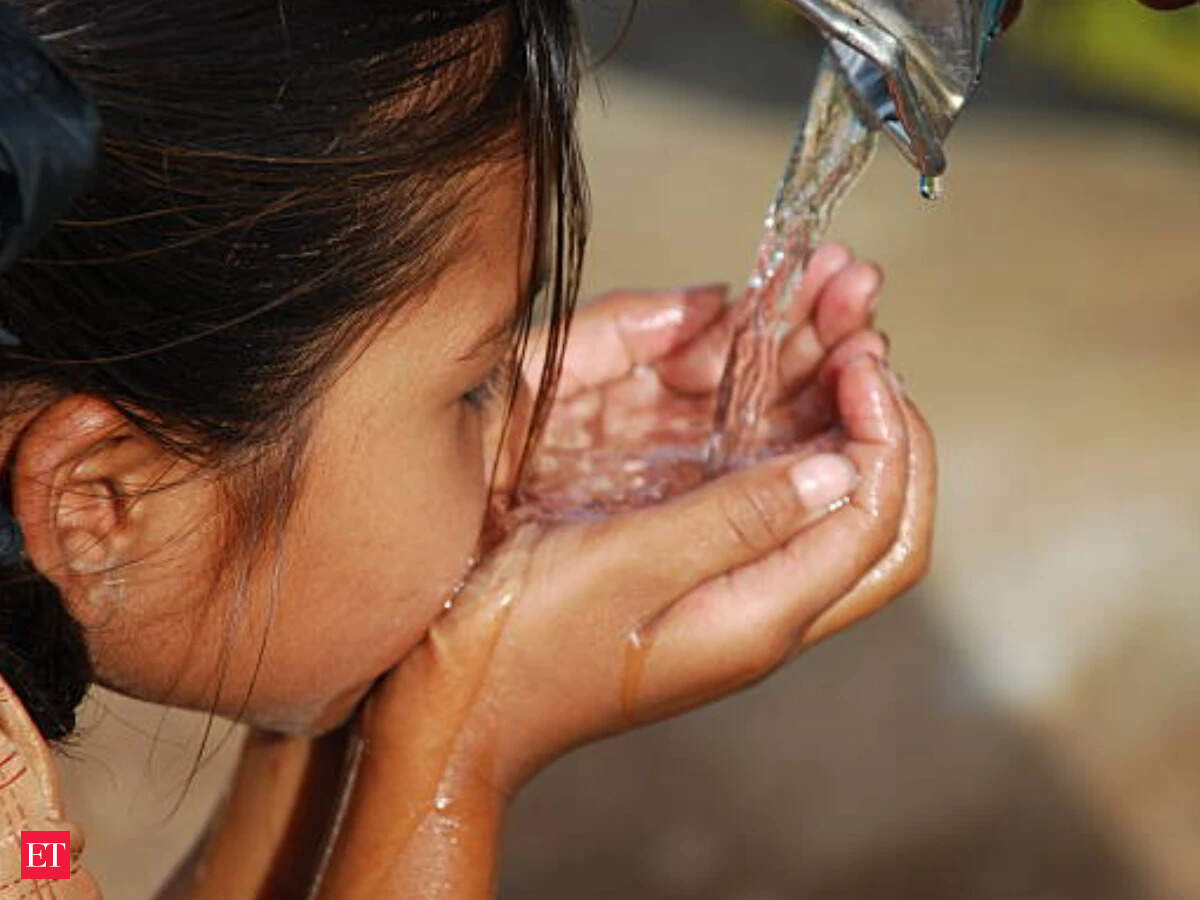
iStock United Nations: From bringing drinking water to millions of households to cleaning one of its most revered rivers, India's efforts to address its water challenges are increasingly drawing attention beyond its borders, with a senior World Bank official describing the initiatives as a model for developing nations. "For the World Bank Group , India is a remarkable success story. It's the water journey that every single developing country is looking at," Saroj Kumar Jha, Global Director for Water at the World Bank Group, said in response to a PTI question during a virtual press briefing ahead of the 2026 United Nations Water Conference. Also Read: 2026 set to rank among four warmest years on record, says WMO The recognition comes at a time when water security is increasingly becoming a global development priority, with countries grappling with the twin challenges of ensuring equitable access to clean water and protecting existing water resources from pollution and unsustainable use. Co-hosted by the United Arab Emirates and Senegal, the UN Water Conference will be held in Abu Dhabi from December 8 to 10. Live Events It will bring together world leaders, policymakers and other stakeholders to explore ways to strengthen international cooperation on water security and sanitation. Also Read: As Delhi gasps for clean air, parliamentary panel skips hearing on air pollution For Jha, India's experience offers something beyond ambitious targets and large-scale government programmes, a practical blueprint that other developing nations can adapt to their own circumstances. He highlighted several Indian initiatives, including the Jal Jeevan Mission , Namami Gange and Swachh Bharat Mission . Jha said during his recent visit to New Delhi and meetings with Indian government officials, he had encouraged them to use the international conference as a platform to share its experience and demonstrate how large-scale water management initiatives could be implemented. "India has done what other countries are now trying to work on, and India offers the how-to part of the water solution," he said. Among the initiatives that have particularly impressed the World Bank is the Jal Jeevan Mission, which has sought to transform access to drinking water in rural India. Highlighting the scale of the programme, Jha said reaching 800 million people with improved drinking water access in less than seven years is a "remarkable" achievement. He described India's efforts to expand drinking water access in both urban and rural areas as "unprecedented", while pointing out that the programme is now evolving beyond expanding coverage to focus increasingly on sustainability, operations and maintenance. India's sanitation experience, too, has found resonance abroad. Jha cited Nigeria's 'Clean Nigeria' campaign as an initiative influenced by India's Swachh Bharat Mission. "What India has done is already spreading to many other countries across the globe, and particularly countries in the South are looking at Jal Jeevan Mission as a good model to replicate with popular participation of people, government-strong leadership, adequate financing at all levels," he said. If access to drinking water and sanitation represents one dimension of India's water transformation, the effort to restore the health of its rivers represents another. Jha described the Namami Gange Programme as "remarkably successful" in reducing pollution in the Ganga and improving the overall health of the river. The World Bank has supported the National Mission for Clean Ganga through various financing instruments. For Jha, river conservation also has a significance that goes well beyond environmental protection. "Rivers are not just rivers; they are part of our civilisation, part of the human system. People depend on these rivers for their livelihood," he said. The World Bank official also highlighted India's efforts to improve dam safety, saying the bank's funding had helped strengthen the resilience of nearly 900 dams. The establishment of centres of excellence has further helped build technical expertise and institutional capacity in the sector. India's urban water management initiatives also drew praise, particularly efforts to encourage creditworthy municipalities to tap capital markets and mobilise resources for improving civic water services. Jha acknowledged that India continued to face considerable challenges in water management, but said the progress made at both the central and state levels offered valuable lessons for other countries. "We are looking at the entire system of water management in India... What they have done in this field is really remarkable, at the state level and the central government level," he said. India is expected to play an active role in the upcoming UN conference. Stephanie Rambler, Senior Sustainable Development Officer at the UN Department of Economic and Social Affairs, said the country is "very active" in preparations. India is expected to send a large high-level government delegation and organise a side event on 'river cities', focusing on water security and resilience, she said. The conference will feature seven plenary meetings and six interactive dialogues, besides special events aimed at accelerating progress towards Sustainable Development Goal 6, which seeks to ensure access to clean water and sanitation for all. Add as a Reliable and Trusted News Source Add Now! (You can now subscribe to our Economic Times WhatsApp channel ) Read More News on India water management Jal Jeevan Mission World Bank Namami Gange Swachh Bharat Mission UN Water Conference 2026 water security rural drinking water sanitation initiatives World Bank Group (You can now subscribe to our Economic Times WhatsApp channel ) Read More News on India water management Jal Jeevan Mission World Bank Namami Gange Swachh Bharat Mission UN Water Conference 2026 water security rural drinking water sanitation initiatives World Bank Group Prime Exclusives Investment Ideas Stock Report Plus ePaper Wealth Edition Business of Odd Things: The farm that needs no land, freshwater, or fertiliser KYC and KYB: Inside Pidilite, the company that turned Fevicol into a word for a strong bond – Part 1 of 3 Seoul halts trading, Nifty has its best week since 2021: Money leaving the AI trade – will it land in India? Junk bonds are cracking at the bottom. Will the noise get loud enough to make ‘junk bond’ a household term again? PNG connections rise half a million, but how many use piped gas for cooking? Some elections matter more than you know: No crop changed in the fields, yet sugar, coffee and soya got cheaper in a day 1 2 3 View all Stories
By Katherine Langford

By Marcus Chen

By Katherine Langford
By Katherine Langford