
Technology
Fold Epic Paper Airplanes
By Marcus Chen
Advertisement · Why this ad?
Katherine oversees editorial operations across all six brands. Before joining The Meridan Group, she spent 14 years at the Minneapolis Star Tribune, where she led the metro desk through its digital transformation. She holds a Master's in Journalism from Northwestern's Medill School.
More from Katherine →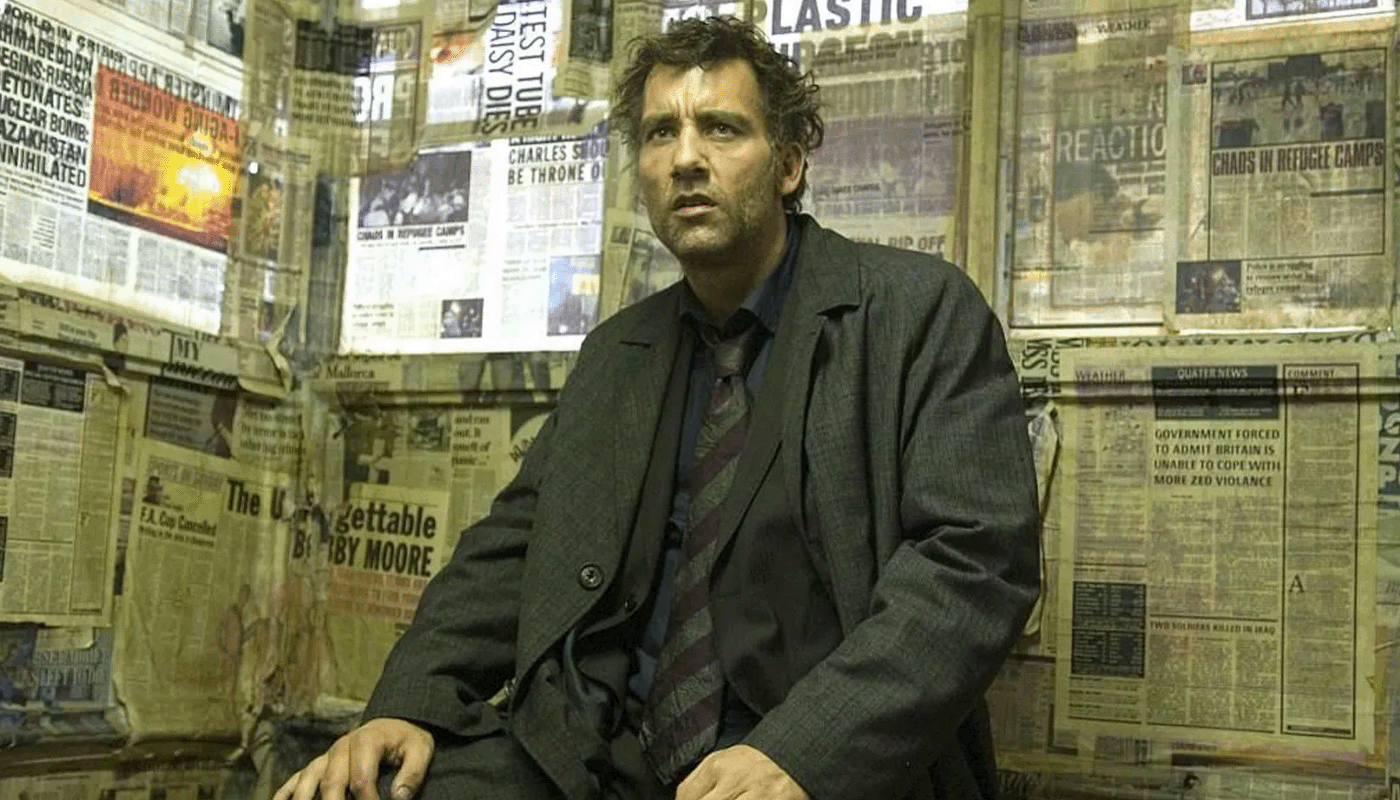
Home / Science Fiction Film Club / Children of Men : The Future Is a Mirror for the Present Comment 7 Share New Share Column Science Fiction Film Club Children of Men : The Future Is a Mirror for the Present Don't look away: this remains one of the absolute best sci fi movies of the 21st century. By Kali Wallace | Published on October 28, 2026 Credit: Universal Pictures Comment 7 Share New Share Credit: Universal Pictures Children of Men (2006) Directed by Alfonso Cuarón. Written by Alfonso Cuarón, Timothy J. Sexton, David Arata, Mark Fergus, and Hawk Ostby, based on the novel by P.D. James. Starring Clive Owen, Clare-Hope Ashitey, Julianne Moore, and Michael Caine. I’m going to start with a pair of definitive statements that I know are annoying but very much believe to be true: All science fiction is political, and all stories about the future are actually about the present. Science fiction, in its broadest definition, is about imagining and extrapolating stories from significant changes to ourselves, our societies, and our worlds. Sure, there are varying degrees of intentionality, and there are certainly people who genuinely think (erroneously) that they are telling a story unaffected by all the pesky problems and prejudices of the world around them. At the other extreme we have Children of Men , a film that is crafted to say several pointed and complicated things about the world, and does it so exquisitely it has only grown more important and powerful in the twenty years since it was released. Children of Men is loosely based on the 1992 novel The Children of Men by British author P.D. James (also known as Phyllis Dorothy James White, Baroness James of Holland Park). The film is more of a creative variation on a theme than a direct adaptation, a fact that Alfonso Cuarón was clear about from the start and James herself was happy with in the end. I did read the book around the time it was released, as I was a young fan of James’ mystery novels, but I was much too young to appreciate its themes and don’t remember what I thought about it. The Children of Men is about a near future in which humans can no longer produce children, and it explores the resulting social, political, and philosophical tensions in the United Kingdom. The main character is an Oxford historian, the plot moves through both halls of government power and dissident groups, and the story explores tyrants rising to power amidst society’s despair, the exploitation of immigrant populations, and the role of faith and religion in both personal and political lives. Because the book is heady, intellectual, and came out in 1992, there are a lot of example of people insisting it cannot possibly be science fiction, such as this New York Times comparison of book and movie from 2006 : “ The Children of Men is not another of Ms. James’s famed detective novels, and it is not, as it has sometimes sloppily been described, science fiction. It is a trenchant analysis of politics and power that speaks urgently to this social moment, a 14-year-old work that remains surprisingly pertinent.” It’s silly to frame “science fiction” and “a trenchant analysis of politics and power that speaks urgently to this social moment” as separate categories, but it’s a divide people apply to the movie as well, including the people who actually made the movie. I guess the book can’t be sci fi because it’s too serious about explaining its world, and the movie can’t be sci fi because it doesn’t explain its world, and I already find this “is it sci fi???” line of discussion tedious. Yes, it is. Let’s move on. The idea for turning James’ novel into a film came not long after the book was released, but it took several years and several screenwriters to get any traction. Paul Chart wrote the first version, then Mark Fergus and Hawk Otsby rewrote it. From early articles, it looks like their script was a lot closer to the book. Mexican filmmaker Alfonso Cuarón read their version of the screenplay but wasn’t much interested in it—at least, not at first. He has said in interviews that he initially dismissed it, but something about the story stuck in his mind. When he and screenwriter Timothy J. Sexton took their own crack at the screenplay, they approached it from a rather unexpected angle. As Cuarón described it , “We said: let’s do something like Y tu mamá también —but in the future.” He was referring to his breakout film Y tu mamá también (2001), a sexy coming-of-age road movie set during Mexico at the end of the 1990s. It is not, on the surface, a film that bears any resemblance to Children of Men , but I think Cuarón’s reasoning makes sense. He had previously made two Americanized versions of British literary classics, The Little Princess (1995) and Great Expectations (1998), and he would spend two years in the UK making Harry Potter and the Prisoner of Azkaban (2004). Y tu mamá también looks like the outlier in that filmography, but it’s a film Cuarón made to consciously reject the polished Hollywood style of filmmaking in order to better portray the people and places of his home country. P.D. James’ The Children of Men is yet another very British book, but the parts of the story that fascinated Cuarón weren’t about the people who rise to power or gather to argue about the world’s problems, or even the details of how the near-future world functions. He was looking at it from post-9/11 perspective on world politics and thinking about how he could employ a more intimate scope to use the movie’s speculative world to illuminate our real one. To do that, he narrowed the scope of the story compared to what’s in the novel, and shifted the sociopolitical commentary away from exploring how and why authoritarian regimes rise to power, moving instead toward looking at what the societies they build do to the least powerful among them. The speculative element underlying the near-future world is more or less the same: Nearly two decades ago, humanity suffered a mass infertility epidemic that science has not been able to cure, and no children have been born since. Cuarón has said repeatedly (probably because he was asked repeatedly) that he had absolutely no interest in trying to explain the infertility, because as soon as you start explaining it people start nitpicking the explanation. He’s completely right about that. He’s also right that it’s irrelevant. The film follows Theo Faron (Clive Owen), a man living in London in the futuristic year of 2027. Very little about the world is exposited directly, but we learn enough to know that many terrible things have befallen cities and nations around the world. The United Kingdom has closed its borders to immigration and showers the population with propaganda about how Britain is the last civilized place in the world. Refugees are violently rounded up, locked into cages, and shipped to internment camps. …I know. This won’t be the last time we all collectively pause to stare dully into the middle distance and think about how this movie came out in 2006 and has only become more resonant over the past twenty years. Theo is an interesting character for a movie that ends up having quite a lot of action in it. While the film is tightly confined to his perspective, he’s not actually a very active protagonist, at least not at first. He’s deeply depressed but not numb, although it seems like he wishes he could be; the only warmth and connection in his life is the time he spends with his hippie friend Jasper (Michael Caine cosplaying as John Lennon ). When a group of pro-immigration activists led by Theo’s ex, Julian (Julianne Moore), abduct him and demand that he help them, he at first refuses, then reluctantly agrees to do it for the money, not the ideology. Julian’s group wants papers to help transport an undocumented young woman, Kee (Clare-Hope Ashitey), safely to some unknown destination. After Julian is killed in an a
By Marcus Chen

By Katherine Langford

By Marcus Chen

By Marcus Chen